Plants
Researched and illustrated by The Island School's fourth and fifth graders.
Hover over each illustration to learn more.
Tap each illustration to learn more.

Big Leaf Maple
Acer macrophyllumBy Keira
The bigleaf maple is a large deciduous tree. They like to live along stream banks and in moist, shady areas. They are super tall and fun to climb!
The leaves, flower clusters, sprouted seeds, and young shoots are edible. You can also get sap from the tree and make it into maple syrup by boiling it.
Interesting facts: Maple wood is very hard so it makes good flooring. Bigleaf maple is sometimes called Oregon maple or by its scientific name: Acer macrophyllum. Native Americans use the bark as rope and its wood to make artwork, dishes and paddles.
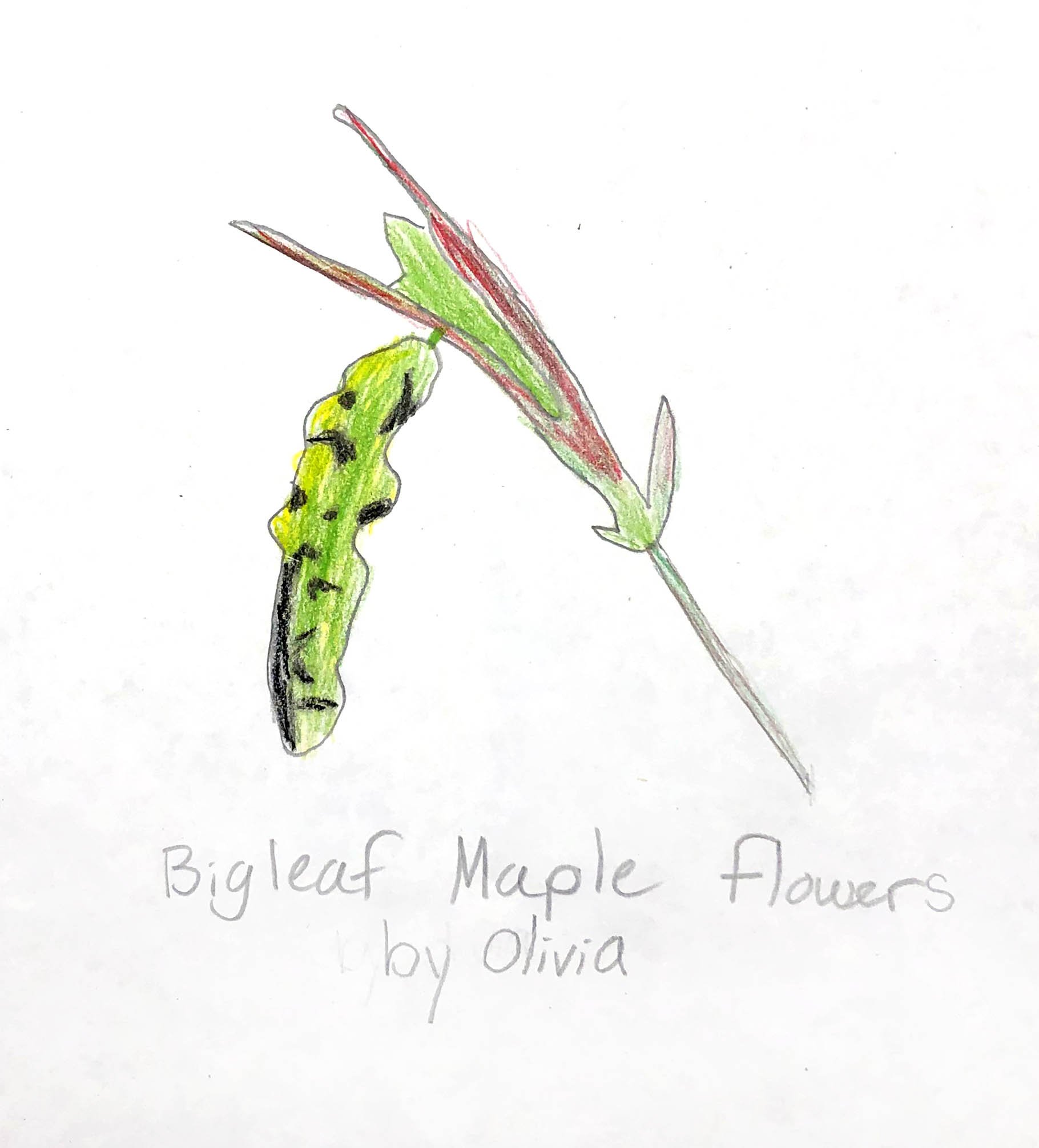
Big Leaf Maple Flower
Acer macrophyllumBy Olivia
The bigleaf maple is a large deciduous tree. They like to live along stream banks and in moist, shady areas. They are super tall and fun to climb!
The leaves, flower clusters, sprouted seeds, and young shoots are edible. You can also get sap from the tree and make it into maple syrup by boiling it.
Interesting facts: Maple wood is very hard so it makes good flooring. Bigleaf maple is sometimes called Oregon maple or by its scientific name: Acer macrophyllum. Native Americans use the bark as rope and its wood to make artwork, dishes and paddles.
Thimbleberry
Rubus ParviflorusBy Maanas and River
Thimbleberry is an edible plant native from southeast Alaska to northern Mexico. The berries on the plant are edible and the plant thrives in open clearings. Thimbleberry was used by Native Americans in ways like using the leaves to wrap and store elderberries. Overall, the plant is very useful and tasty!
Thimbleberry
Rubus ParviflorusBy Maanas and River
Thimbleberry is an edible plant native from southeast Alaska to northern Mexico. The berries on the plant are edible and the plant thrives in open clearings. Thimbleberry was used by Native Americans in ways like using the leaves to wrap and store elderberries. Overall, the plant is very useful and tasty!
Stinging Nettle
Urtica dioicaBy Naomi
Habitat and edible parts:
Stinging nettles most commonly grow along stream banks and in meadows. The leaves of the stinging nettle are the edible parts of the plant. Stinging nettle leaves must be cooked before eating so that they lose their sting.
Medicinal uses:
Stinging nettle tea can be used to combat diarrhea. The stinging nettle plant can be rubbed over arthritic joints and muscles as a counter-irritant. Freeze-dried stinging nettle may relieve hay fever.
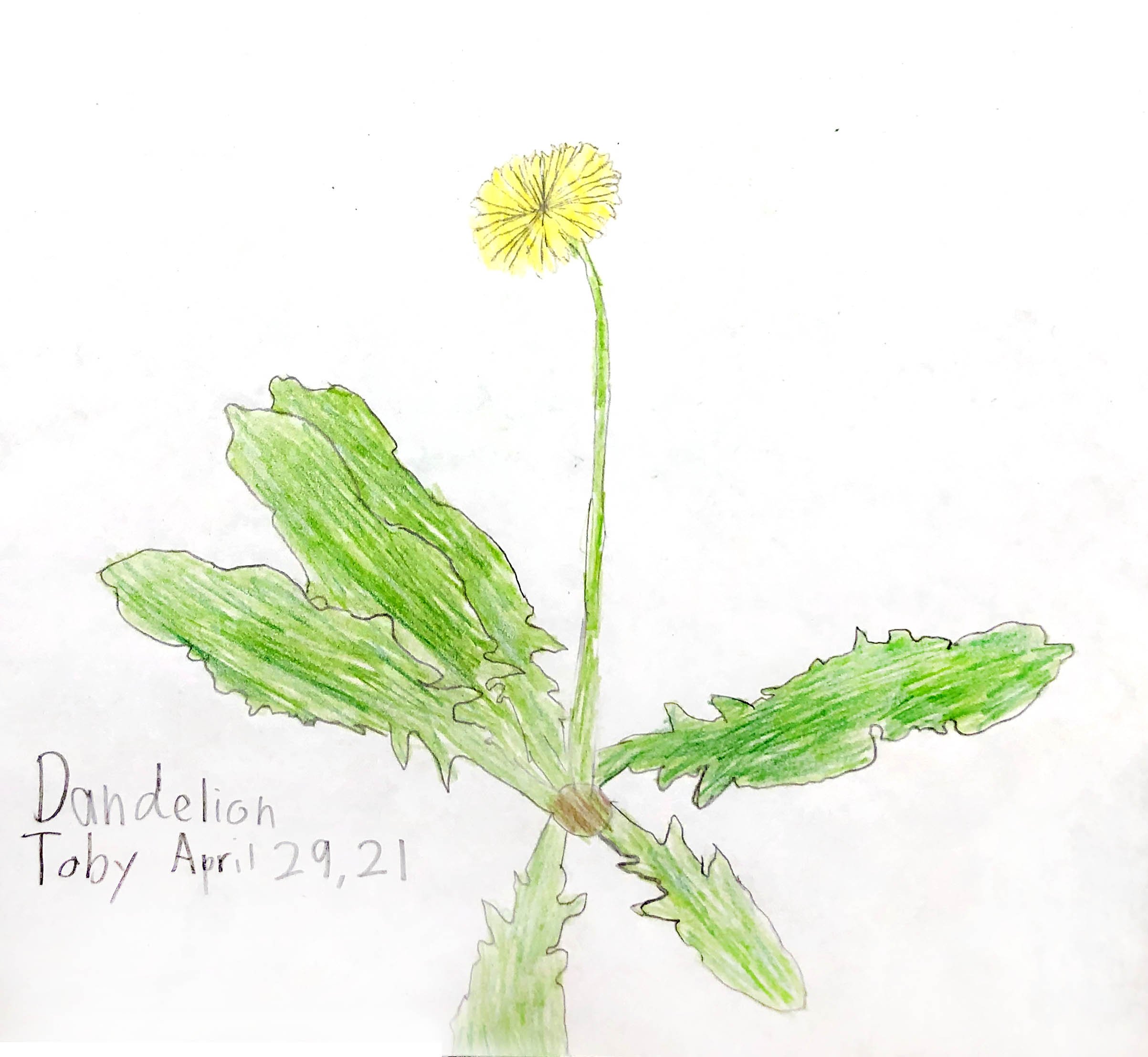
Dandelion
Leontodon taraxacom / Taraxacom officinaleBy Toby
Dandelions, a.k.a. Leontodon taraxacom or Taraxacom officinale, are very cool. They like cleared areas like meadows or yards at mid-low elevations. Most people don’t like having dandelions around, but they actually create the environments dandelions like! But why do most people not like having dandelions around? Well, you could say “They’re just a pesky weed!” but they’re so much more than that. You can eat the crown, the leaves, the roots and the petals. But the truly amazing thing about dandelions is that they have medicinal properties. In Langdon Cook’s book “Fat of the Land,” it says, “The sick ate its roots in the winter and its tender leaves in spring and were restored to health.” They have more potassium than bananas and more iron than spinach. Also, once you roast the roots, you can even use them to flavor ice cream! Dandelions are very cool and much more unique than I ever could have imagined!
Salmonberry
Rubus spectabilisBy Henrik and Henry
Salmonberry’s native habitat is moist slopes, sunny banks, and seasonally flooded meadows.
The berries and the young shoots (when peeled) are edible. The berries will turn to mush in your backpack when they get jostled around because the berries are soft. The taste of the berries varies between bushes, so if you don’t like the taste of one berry, try going to a different bush. Salmonberries are an excellent source of vitamins C and K!
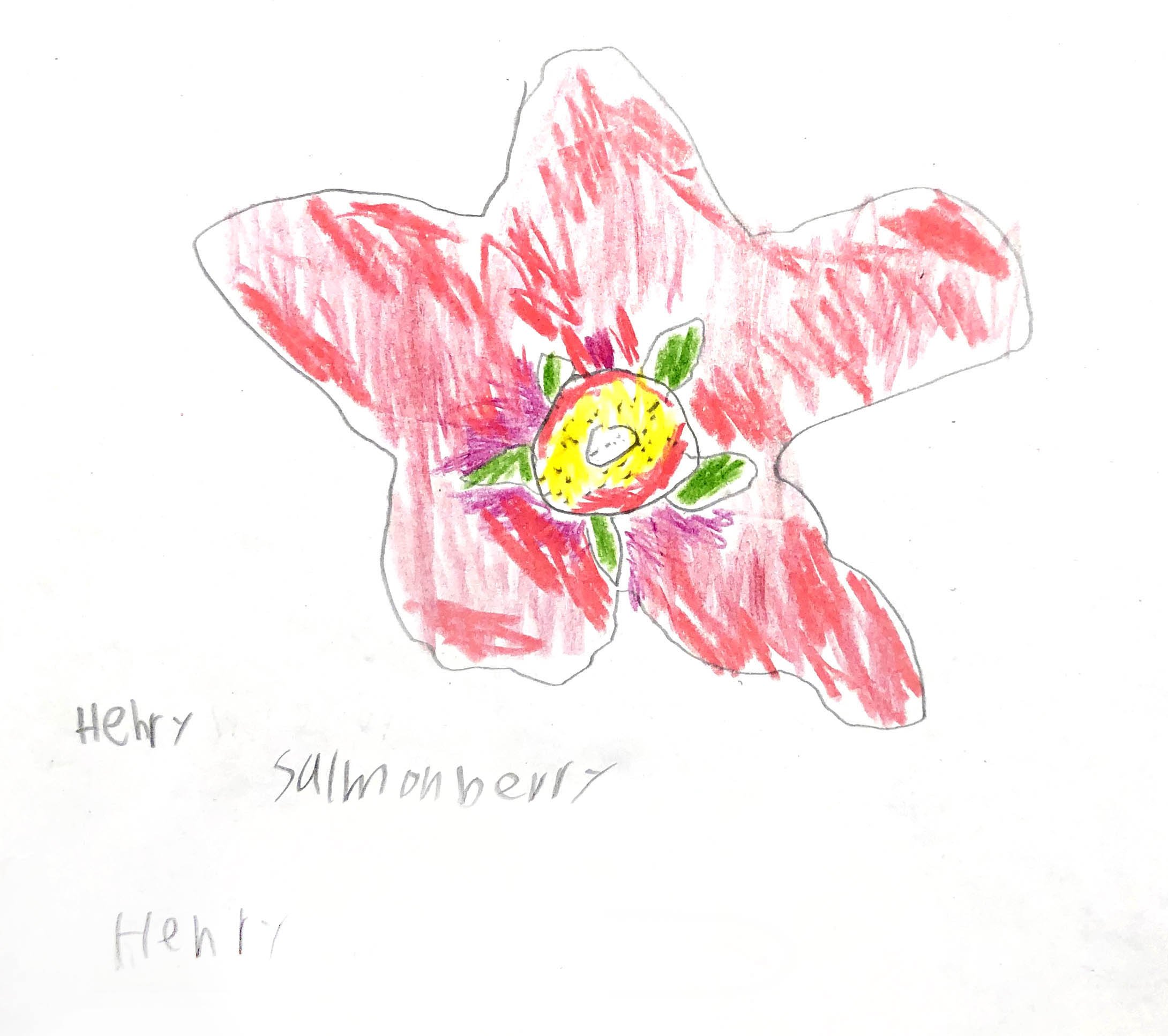
Salmonberry
Rubus spectabilisBy Henrik and Henry
Salmonberry’s native habitat is moist slopes, sunny banks, and seasonally flooded meadows.
The berries and the young shoots (when peeled) are edible. The berries will turn to mush in your backpack when they get jostled around because the berries are soft. The taste of the berries varies between bushes, so if you don’t like the taste of one berry, try going to a different bush. Salmonberries are an excellent source of vitamins C and K!
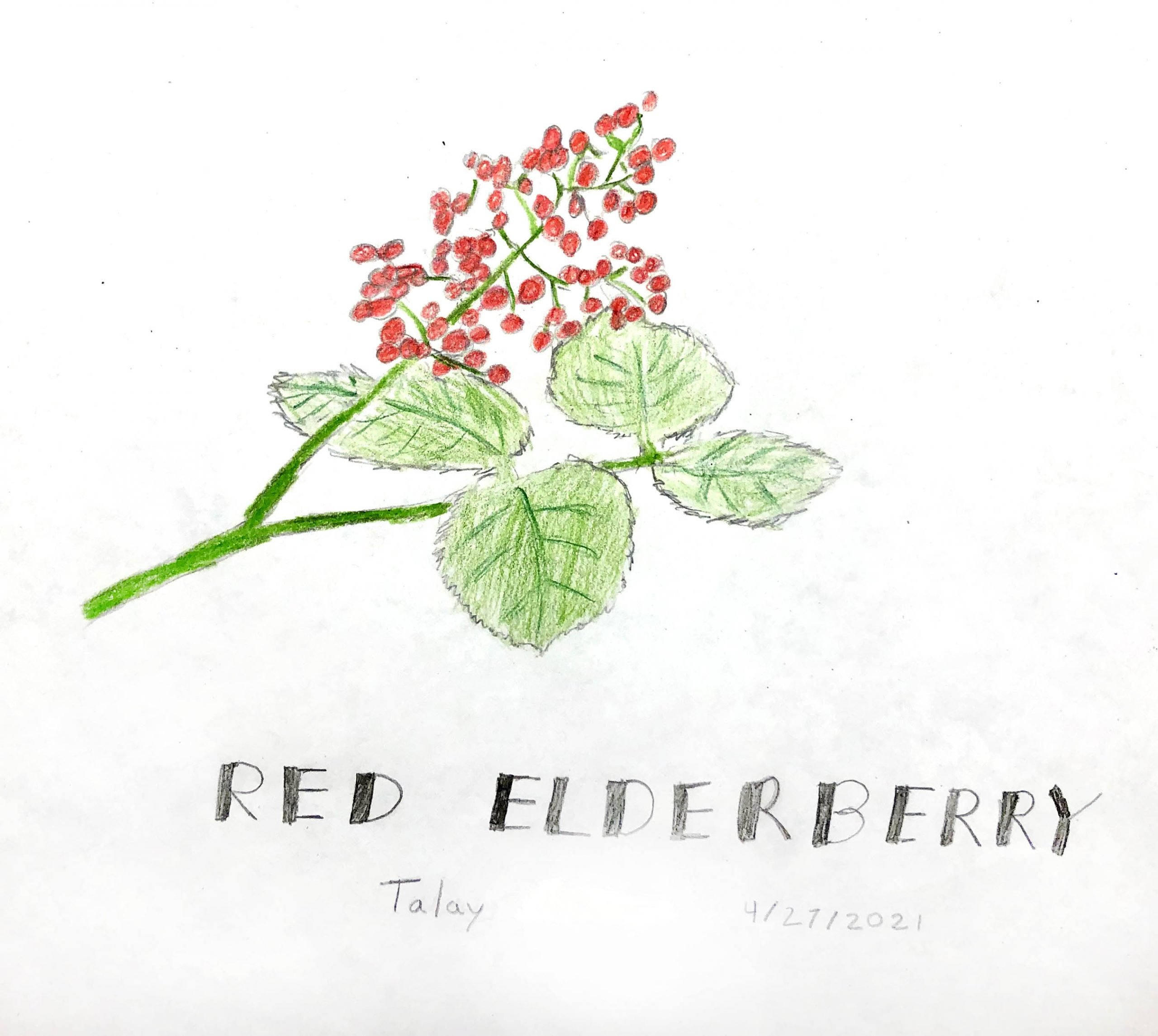
Red Elderberry
Sambucus racemosaBy Talay
Red elderberries like living near streams, in shade, and where there is wet, moist soil. The berries are edible once cooked and can be made into a delicious jelly. Red elderberry has small white flowers with an unpleasant odor. Every part of the red elderberry is considered toxic except the berries and flowers. If you do eat any other part of it, it can cause vomiting, nausea, or diarrhea. Red elderberry can be used to cure sinus infections or to lower blood pressure.
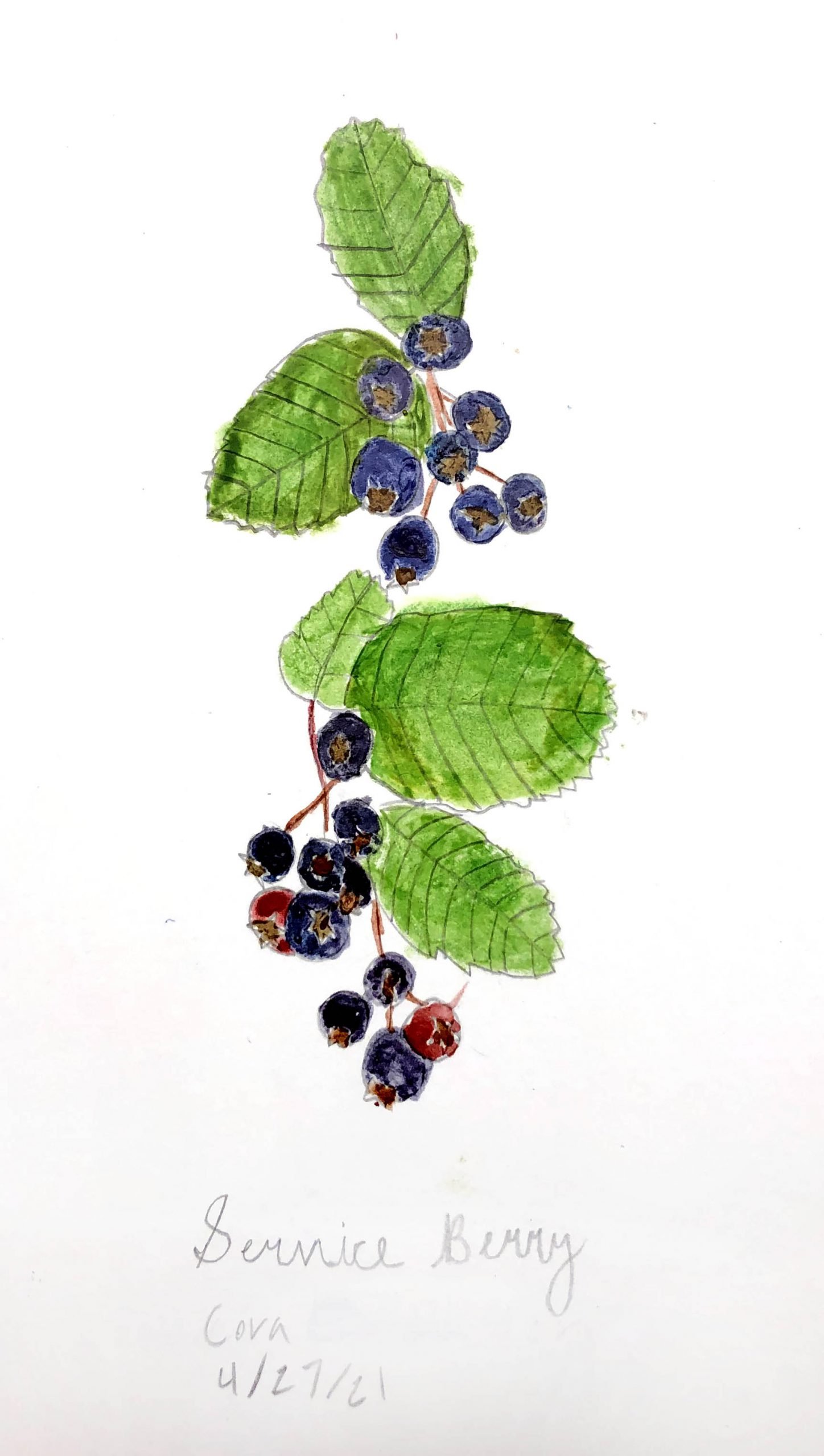
Serviceberry
Amelanchier alnifoliaBy Cora
Also: Saskatoon berry, Juneberry, Shadbush
The entire plant is 3-20 feet tall. The leaves are about 1-2 inches long, and the fruit resembles a blueberry. The serviceberry is mostly found in stream banks, meadows and hillsides. It likes sun or light shade and moist, well-drained soil. It grows in California, Washington, Oregon, Nevada, Montana, Idaho, Utah, Colorado, New Mexico and Arizona. The berries and the leaves are both edible. The berries can be sweet, juicy or seedy, and are good raw or cooked. It can be used to make jam, pies and pastries. The leaves can be eaten fresh or dried for tea.
Uses in the past:
Generations of Native Americans, fur traders, and pioneers relied on the serviceberry. Pioneer women made pies and jam, while Native Americans ate them raw, or crushed them and added a few seeds and roots and shaped them into bread.Salal
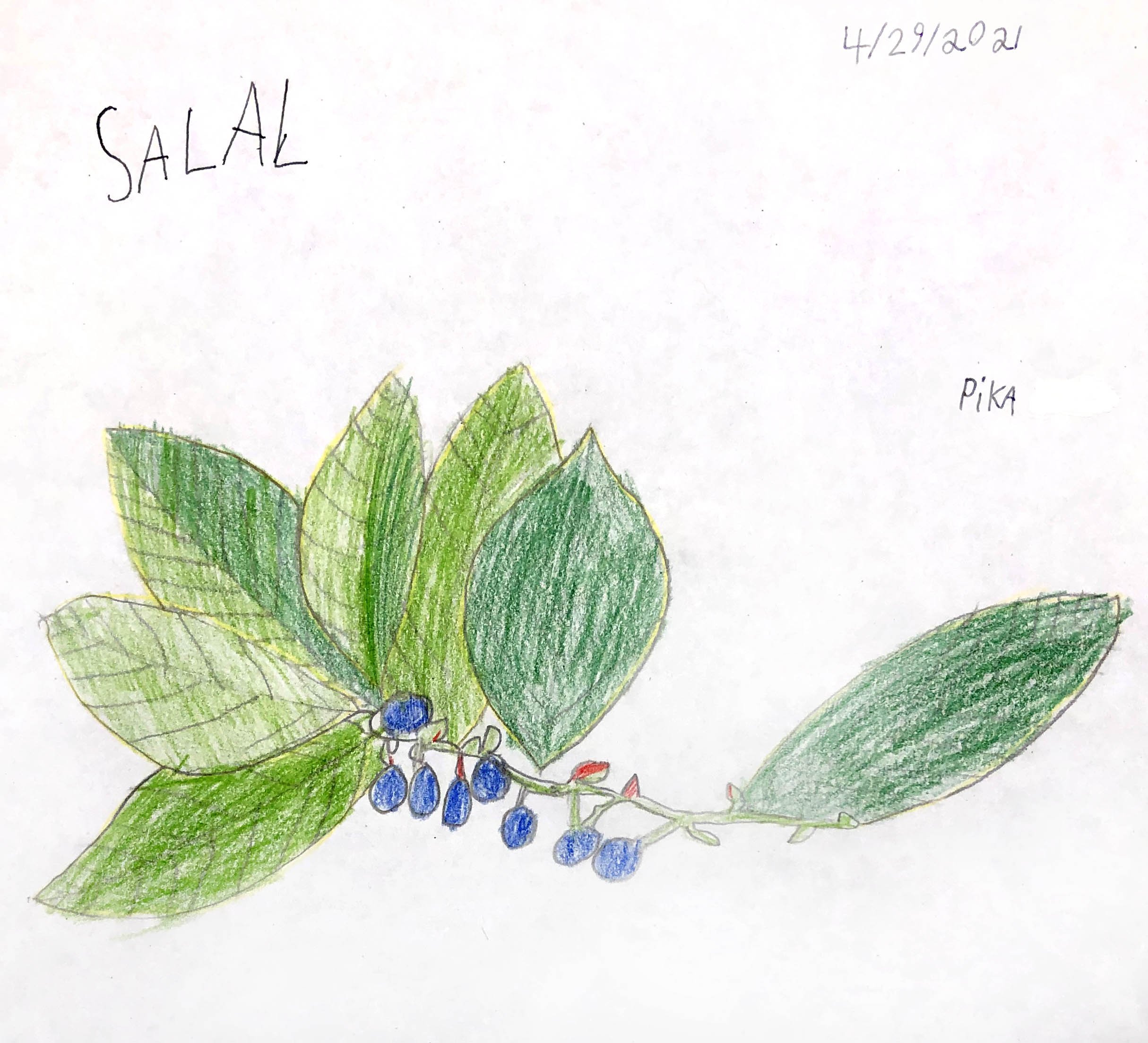
Gaultheria shallonBy Pika and Chase
Salal likes drier forests.
The edible part is the berries. The Pacific Northwest native peoples ate the berries fresh and also dried them in cakes and ate them all winter long. Salal flowers are white or pinkish and bell shaped.
Salal
Gaultheria shallonBy Pika and Chase
Salal likes drier forests.
The edible part is the berries. The Pacific Northwest native peoples ate the berries fresh and also dried them in cakes and ate them all winter long. Salal flowers are white or pinkish and bell shaped.
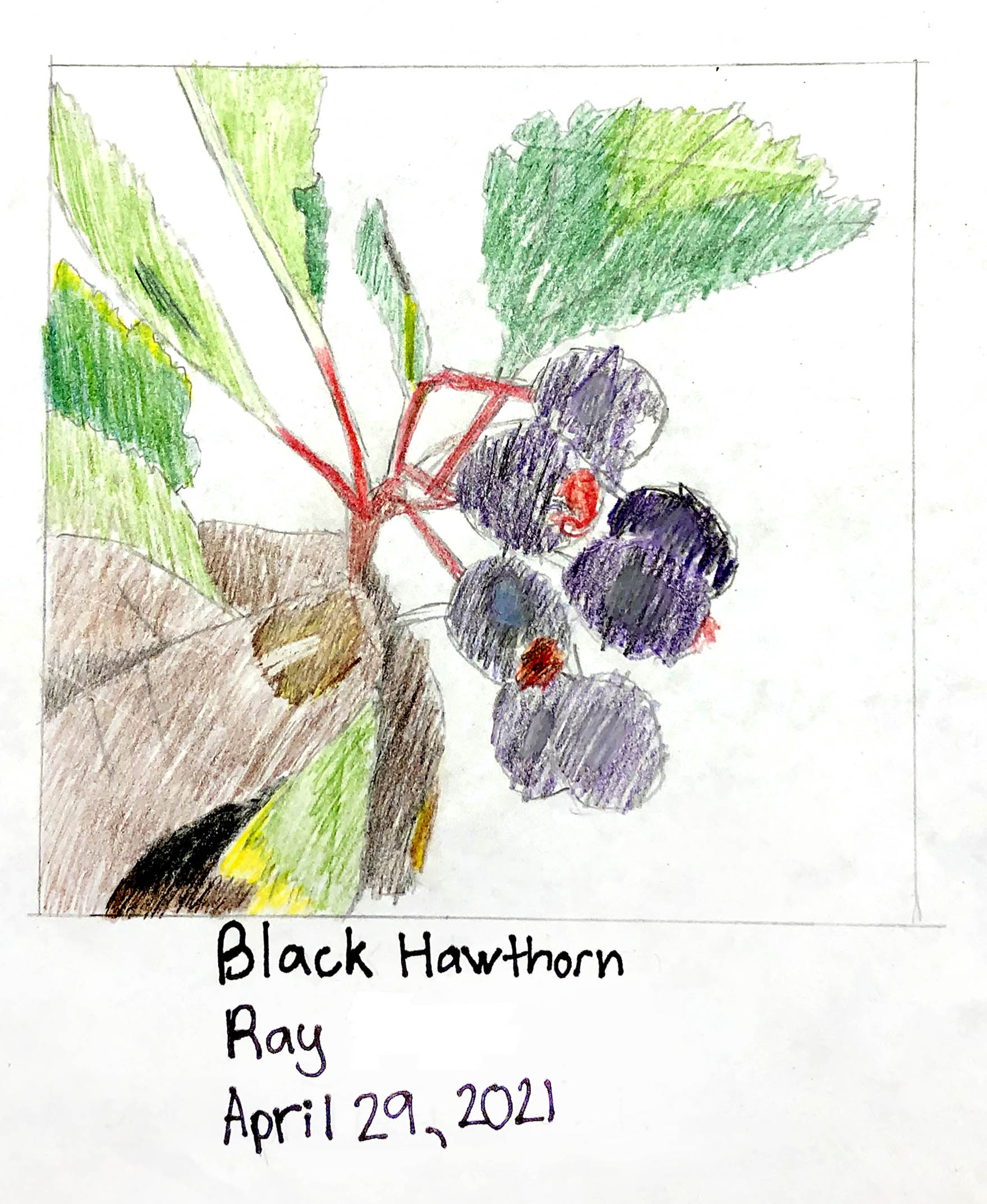
Black Hawthorn
Crataegus douglasiiBy Ray
Black hawthorn trees have an apple-like berry. The black or purple berry is 1/4 to 1/2 of an inch in diameter.
The black hawthorn prefers to live in moist soil near rivers.
The black hawthorn is sometimes used to help keep your heart healthy. Native Americans carve excellent tool handles and weapons from the strong hawthorn wood.
Pacific Trailing Blackberry
Rubus ursinusBy Lauren
The Pacific trailing blackberry, also called trailing wild blackberry, is a plant that is native to Bainbridge Island. It was here when the First Nations People were here. You can use this plant, more specifically the roots and leaves, for some treatment of cancer, sore throats, fever, whooping cough, sores in your mouth, minor bleeding, toothache, and diarrhea. We don’t know if the First Nations People used the Pacific trailing blackberry for all the medicinal purposes that I listed, but we know that nowadays we use a lot of plants, including this one, for many medical reasons.
You can boil the old red leaves from the past season to make tea. You can also eat the berries fresh, or you can put them in a cobbler or pie. You can make a jam or you can dry the berries and put them in a cake. You can find many recipes on the internet, but don’t get this plant confused with the Himalayan Blackberry, because that is an invasive weed!
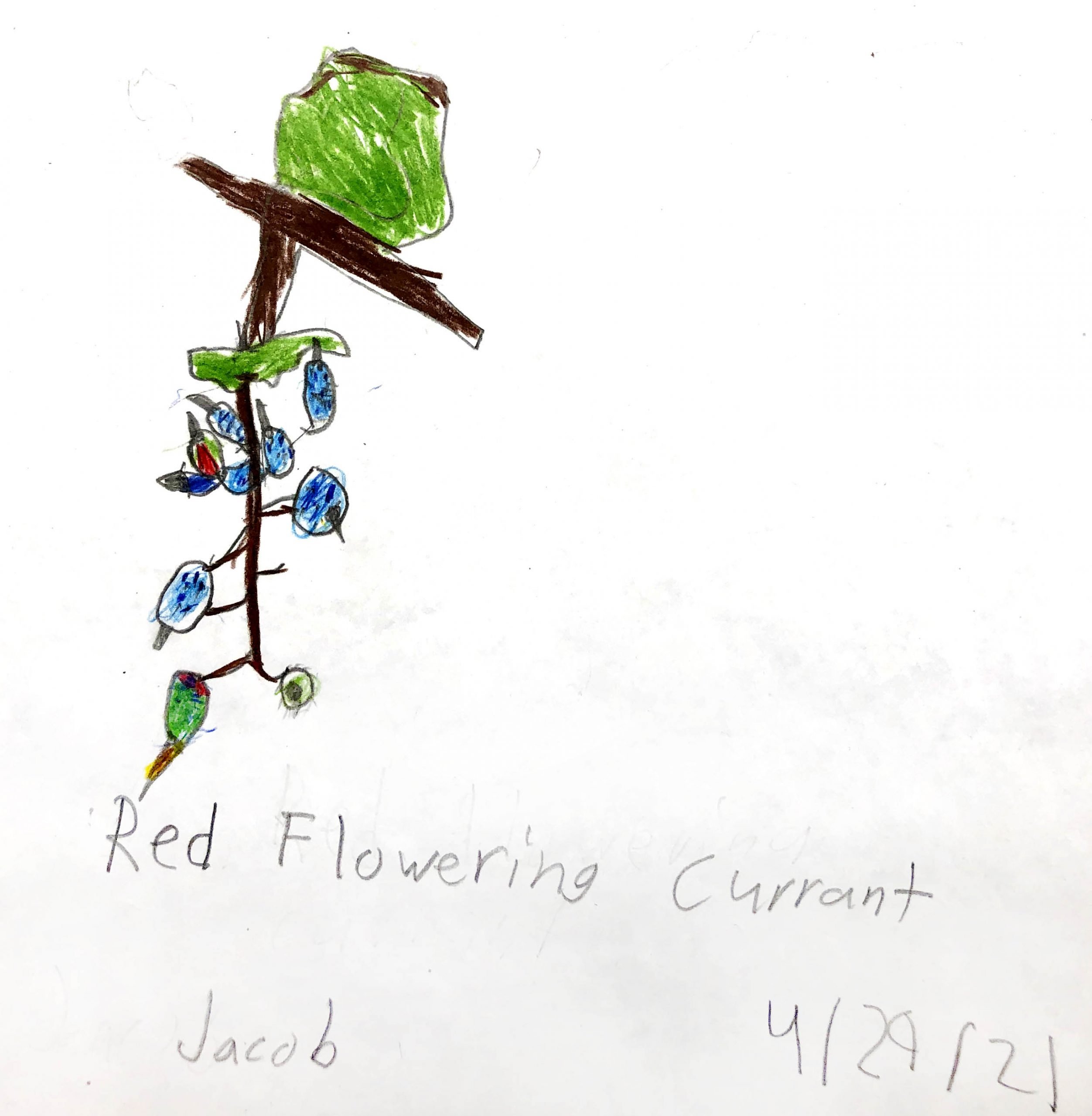
Red Flowering Currant
Ribes sanguineumBy Jacob
Red flowering currant is a fascinating plant that you can use to make delicious pies, “raisins” and many other mouthwatering foods. It likes to live in dry, open woods, and has berries that are edible. The red flowering currant can grow up to 10 feet tall. It gets its name because its flowers are a pinkish-red.
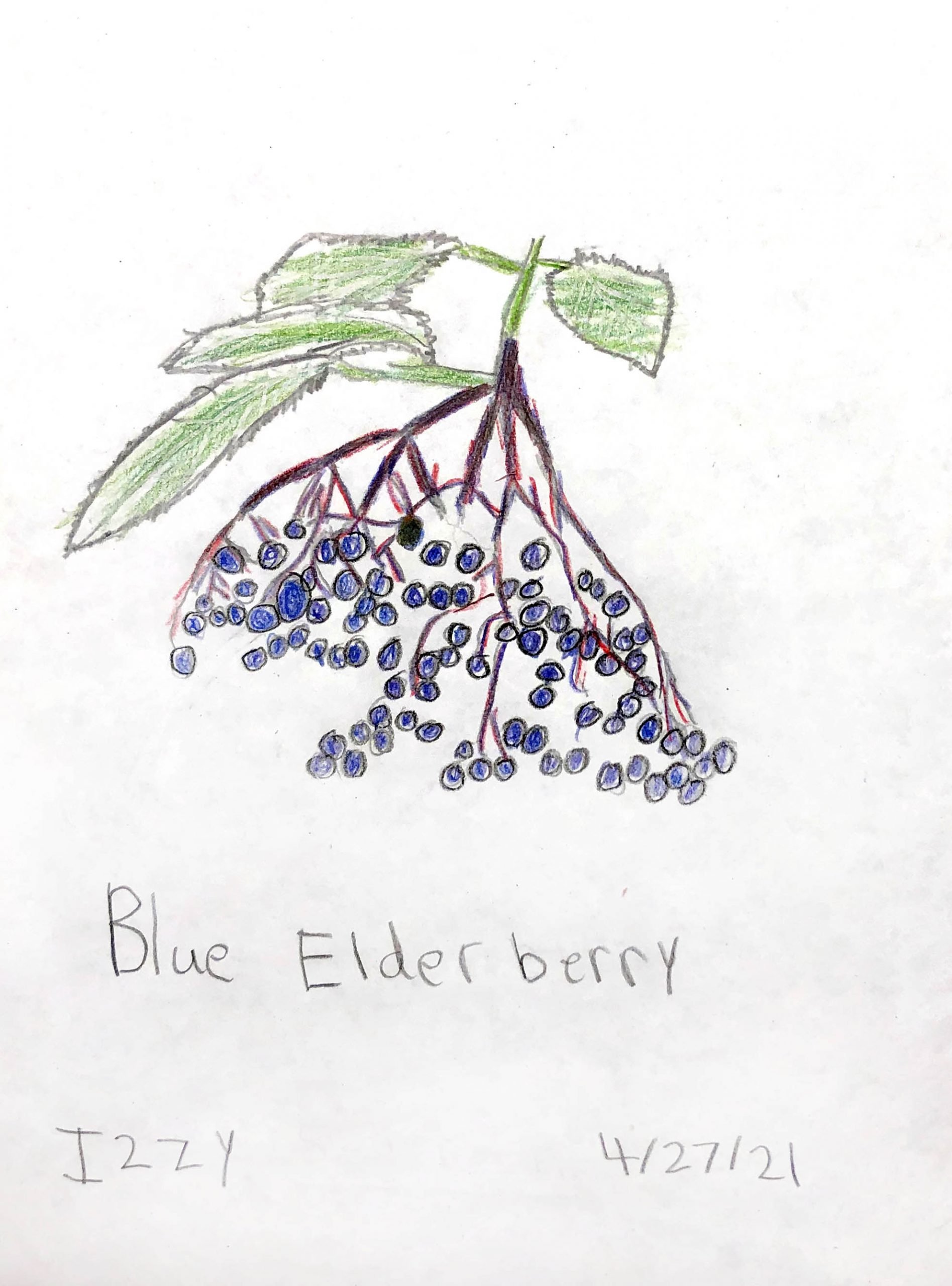
Blue Elderberry
Sambucus caeruleaBy Izzy
Blue elderberry bushes like rich, moist soil, and they live all over the United States. Both the berries and the flowers are edible, but the rest of the plant is toxic. Elderberries can grow taller than 30 feet. They were often planted around houses, as they were believed to keep away evil spirits and lightning. The fruit of a blue elderberry ripens in August.
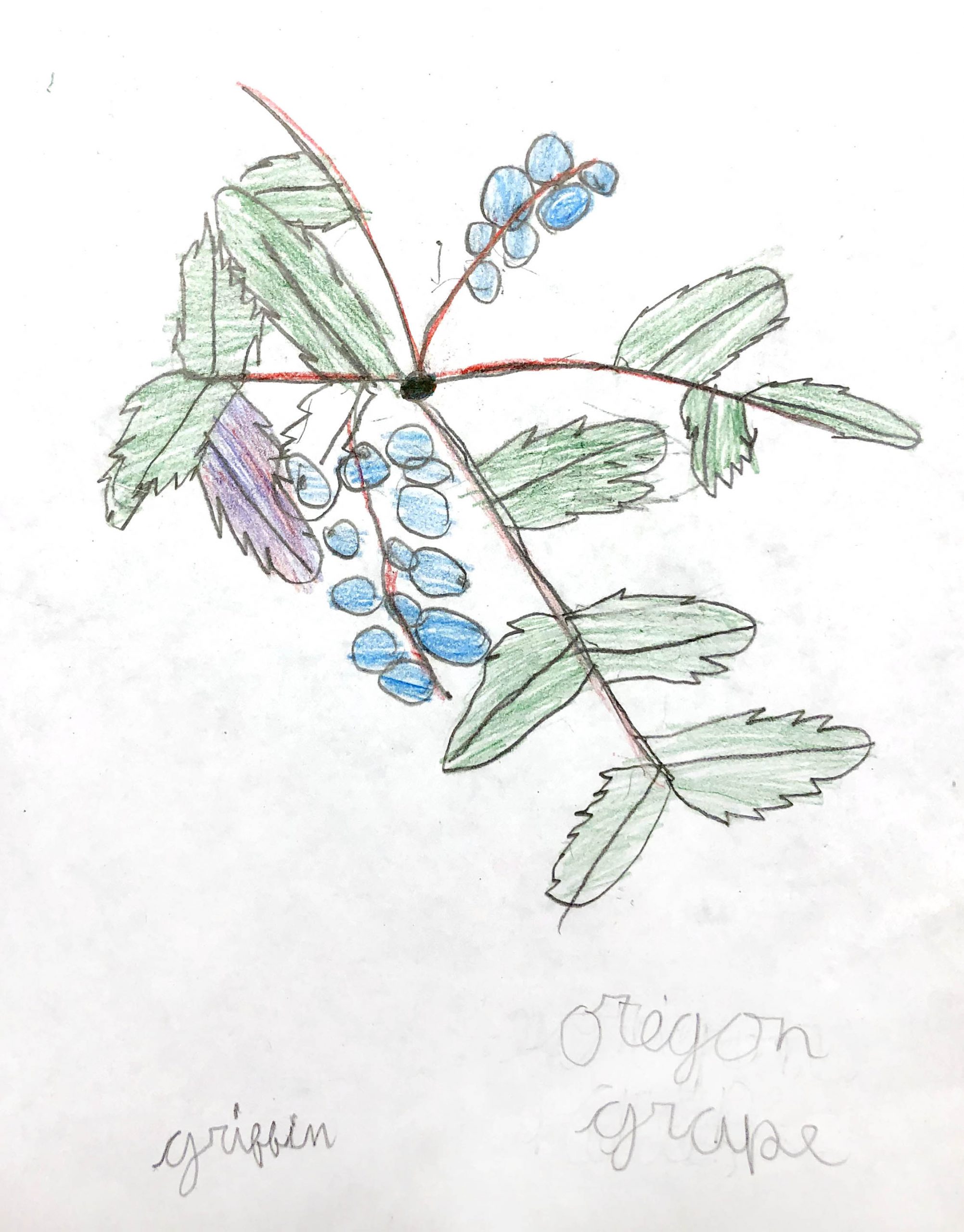
Dull Oregon grape
Manihoa nervosaBy Griffin
Dull Oregon grape is amazing! It likes to live in dry forest. The dull Oregon grape's scientific name is M. nervosa. Their roots were dried and sold as yellow dye. Oregon grape grows two feet high. The berries are tart and edible, and they are also anti-bacterial!
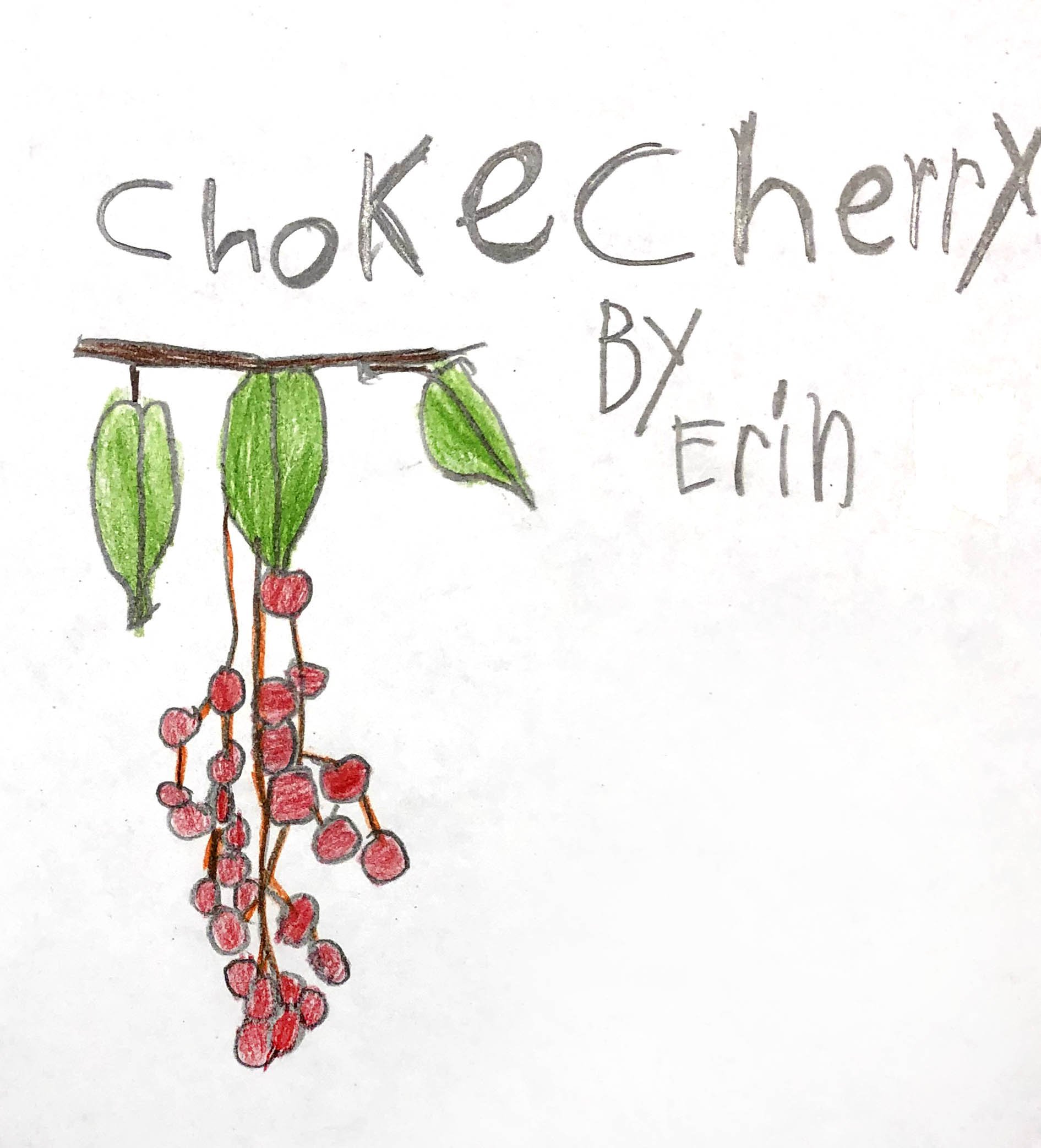
Chokecherry
Prunus virginianaBy Erin
Edible part: the fruit
Native habitat: Can be found in sun and shade. It is always found near rivers and streams.
Interesting facts: The chokecherry fruit is bitter, and without sweetening it, many people will find it hard to swallow. The bitter cherry has a similar appearance to the chokecherry, though the chokecherry is much more bitter.
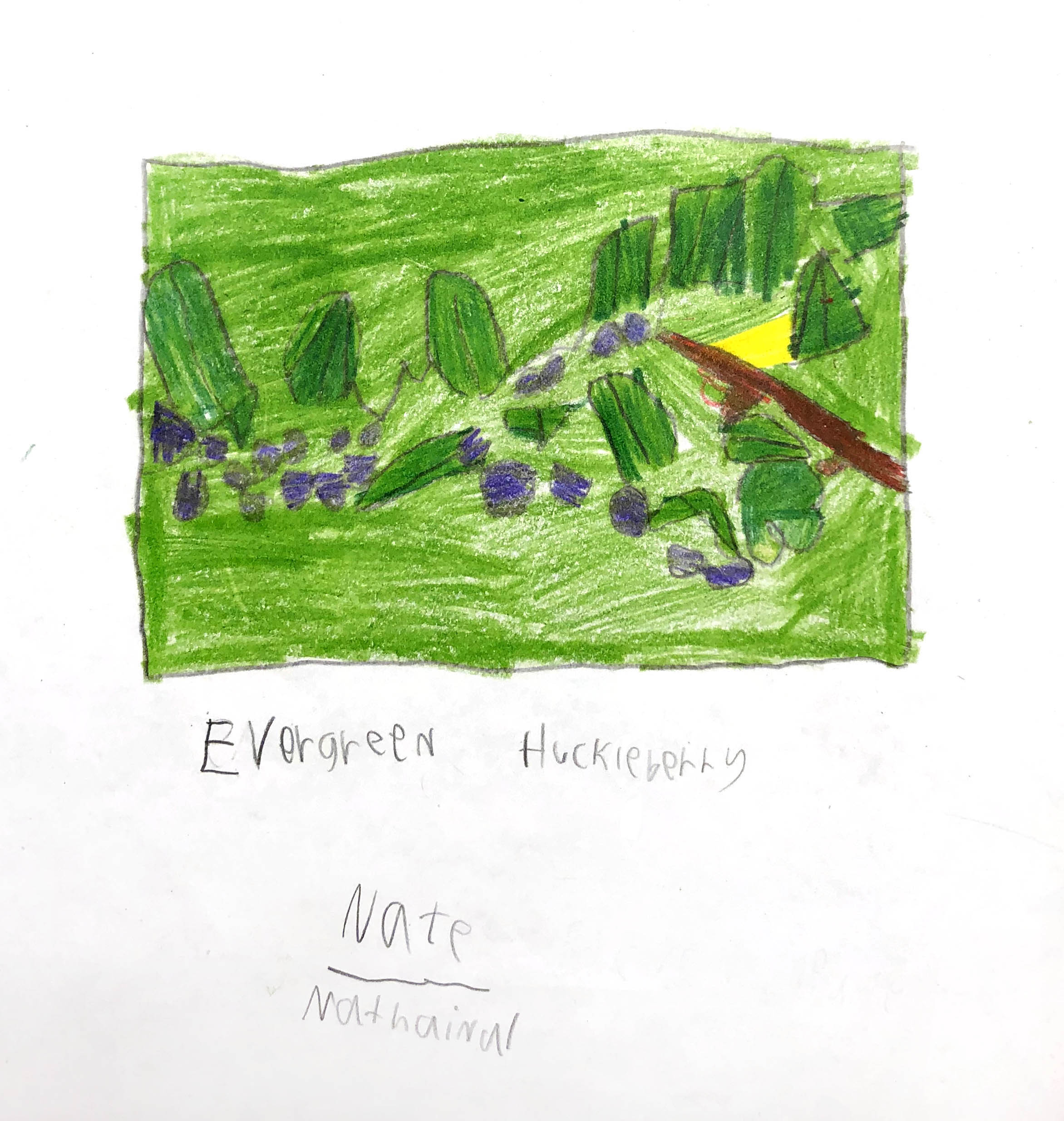
Evergreen Huckleberry
Vaccinium ovatumBy Nate
The evergreen huckleberry’s native habitat is in the sun or shade (perfers 40% sun, 60% shade). It grows better in moist to dry, acidic soil. The berries ripen in early fall.
Native Americans eat the berries fresh or dried them into cakes.
Evergreen huckleberries are considered the tastiest of the huckleberries. You can eat the berries fresh from the bush, in salads, or crushed in cold drinks. You can also make things like jams, jellies, and pies with them. The berries are also good in pancakes, muffins, cakes, and pudding. The leaves can be dried and used to make great tea!
Evergreen Huckleberry Flowers
Vaccinium ovatumBy Adelaide
The evergreen huckleberry’s native habitat is in the sun or shade (perfers 40% sun, 60% shade). It grows better in moist to dry, acidic soil. The berries ripen in early fall.
Native Americans eat the berries fresh or dried them into cakes.
Evergreen huckleberries are considered the tastiest of the huckleberries. You can eat the berries fresh from the bush, in salads, or crushed in cold drinks. You can also make things like jams, jellies, and pies with them. The berries are also good in pancakes, muffins, cakes, and pudding. The leaves can be dried and used to make great tea!
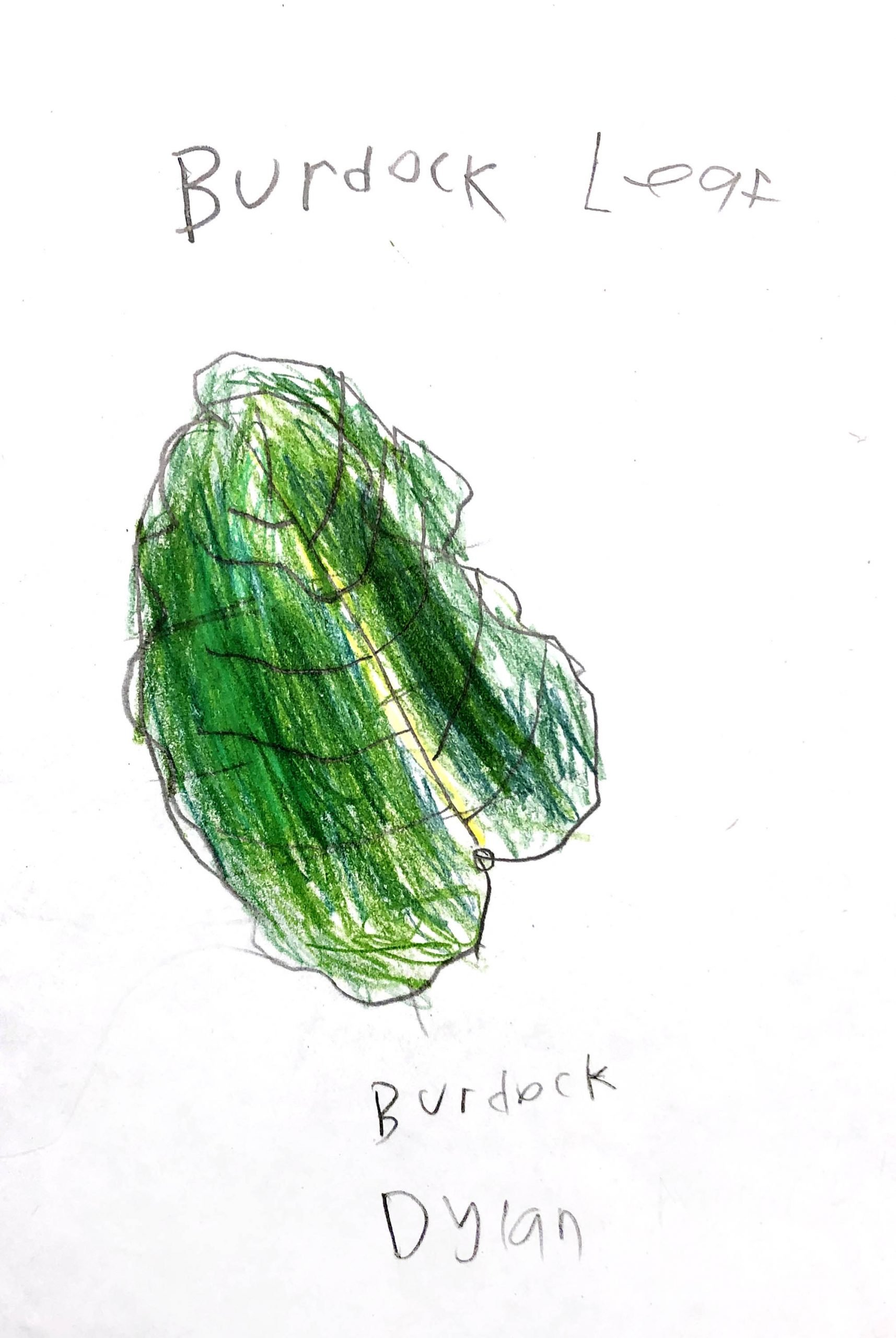
Burdock
Arktium IappaBy Dylan
Burdock, or Arktium Iappa, is not a native species to northwest Washington, but it grows here. Burdock likes to live in wet but sunny spaces. The leaf and stem of the burdock are edible, as are the roots. If cooked right, you can use it for medicine and healing. It’s been most commonly used as a diuretic and a digestive aid.
Crabapple
Malus fuscaBy Cruz
The crabapple’s native habitat is wetlands and stream banks in low elevations. The fruit of the crabapple tree is edible but is very bitter. The crabapple tree can grow up to 40 feet tall. The bark can be used for medical treatment, but you have to be careful because it has a dangerous chemical called cyanide, which is toxic.
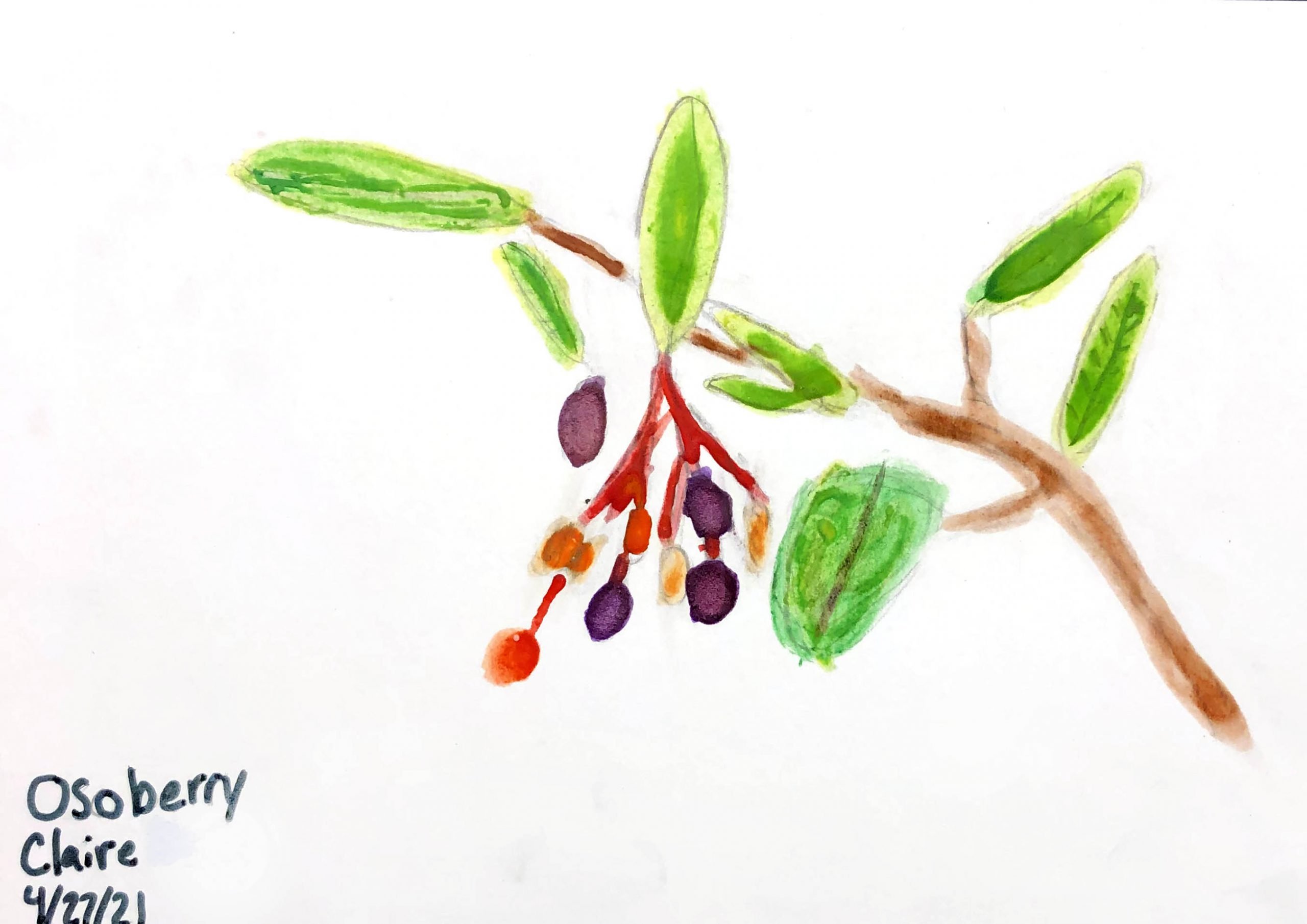
Osoberry
Oemleria cerasiformisBy Claire
Another name for Osoberry is Indian Plum. Osoberry’s native habitat is open forests, rocky valleys and streams. The edible parts of osoberry are the fruits. Apparently crushed foliage smells like green watermelon. The twigs are used as a mild mouth anesthetic.
Native Americans have long known where the sweet berries grow. Native Americans used to pack the plums in hot oil. They also used to chew the twigs and mix the chewed up twigs with fish oil.
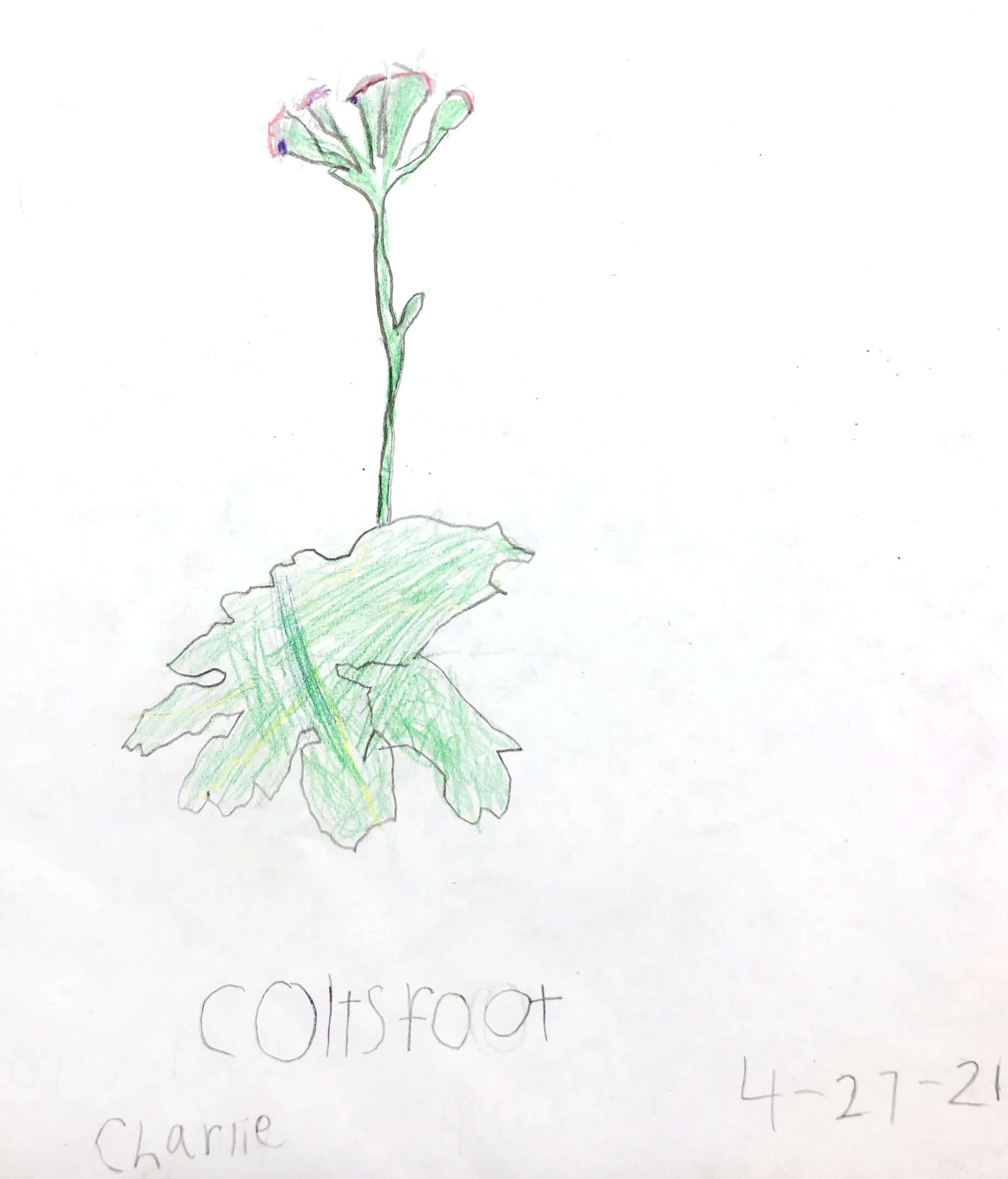
Coltsfoot
Petasites frigidusBy Charlie
Coltsfoot likes to live in wet and shady areas like thickets, swamps and wet forests. The parts of it you can eat are the leaf stalks and flower stems.
It has multiple uses: you can make it into tea to treat chest problems, stomach ulcers, sore throat, and tuberculosis.
Licorice Fern
Polypodium GlycyrrhizaBy Avery
Natural Habitat: The licorice fern lives in humid areas. They like cool, moist summers and warm, wet winters. They are found in places like the Yukon, British Columbia, Washington, Oregon, and California. They grow on moist slopes, rocks, logs, and trees. They also grow on Bigleaf Maple trees on moss, but they will not grow on conifers.
The edible part of the licorice fern is the rhizome. Rhizomes are roots that taste like licorice, thus the name licorice fern. The rhizomes are chewed for flavor and are used to cure colds or sore throats by some Native Americans. Alutiiq People use licorice fern fronds to relieve severe arthritis and to treat broken bones and sprains. Licorice ferns also have spores on the bottom of the leaf that will help stinging nettle stings.
Bracken Fern
Pteridium aquiliniumBy Ash
The Bracken Fern likes roadsides, meadows and clearings. The rhizomes are edible. Warning!! Do not eat without cooking. It can make you very sick!!
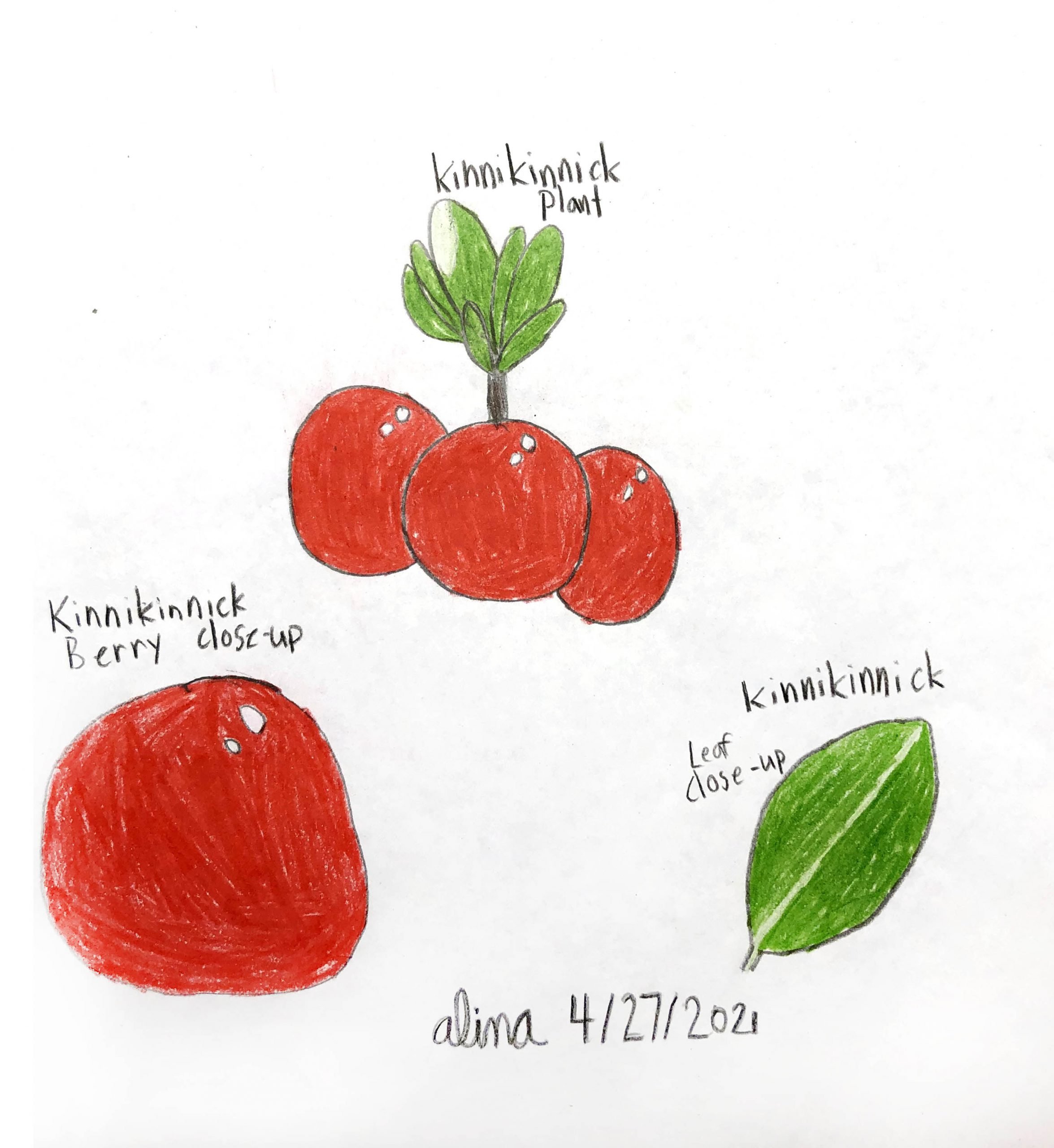
Kinnikinnick or Bearberry
Arctostaphylos uva-ursiBy Alina
Native Habitat: Well drained gravel or sandy soil. Dry and partial shade or full sun.
Edible Parts: Bright red berries
Native American uses: dried leaves for smoking mixture, diuretics for kidney diseases, cooked with venison or salmon, and dried into cakes to be eaten with salmon eggs.
Other Interesting Facts: Attracts birds, butterflies and hummingbirds. When berries are eaten raw, they are tasteless, dry and mealy. When they are cooked, they taste like cranberries, but cooking doesn't improve their dry and mealy texture.